Monday, April 03, 2023

Model Aeronautics Association of Canada Politics covered in the "Road So Far" by Marc Sharpe

In March of 2023 the Model Aeronautics Association of Canada (MAAC) lost the the Transport Canada model airplane exemption that many MAAC members had spent years working at to obtain. The main reason was the MAAC board of directors (MAAC zone directors) was unable to restrain a couple fellow zone directors from opening and approving new flying sites in controlled airspace. Under the MAAC Transport Canada exemption, no new flying sites were to be approved in controlled airspace until a written agreement was in place with Nav Canada. Thus the opening of new MAAC flying sites was in violation of the exemption and thus the exemption was pulled by Transport Canada.

Why was MAAC unable to regulate the opening of new flying sites within MAAC? In my opinion the main reason is that the MAAC board operates in a dysfunctional political manner. Politics and ideology relating to role of the  FAI  in MAAC started many years, some say as early as 1994. 

This 2023 essay by former MAAC Zone D director Marc Sharpe sheds light on the divisive politics within MAAC.

The link to the Part 1 and Part 2 of the pdf essay titled "The Road So Far - Marc Sharpe’s RC Biography and his descent into the MAAC political arena" is below.

The Road so Far Part 1

The Road so Far - Part 2

or you can read Marc's post on the Road So Far  -  MAAC politics online at RCCanada https://www.rccanada.ca/rccforum/showthread.php?t=633815

Thursday, November 10, 2022

Top Flite 1/5 P-51D two piece wing retrofit

Top Flite 1/5 P-51D two piece wing retrofit

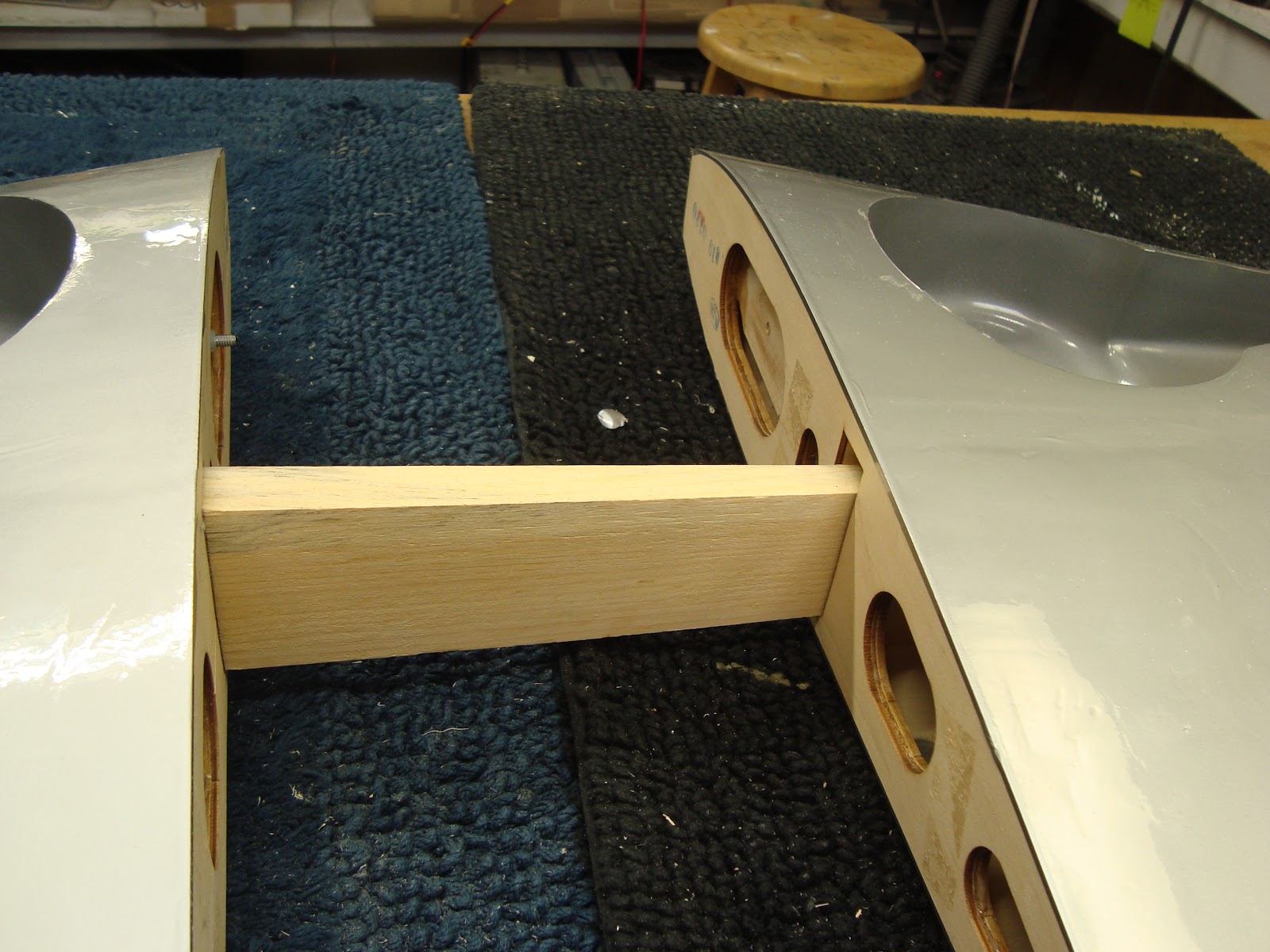
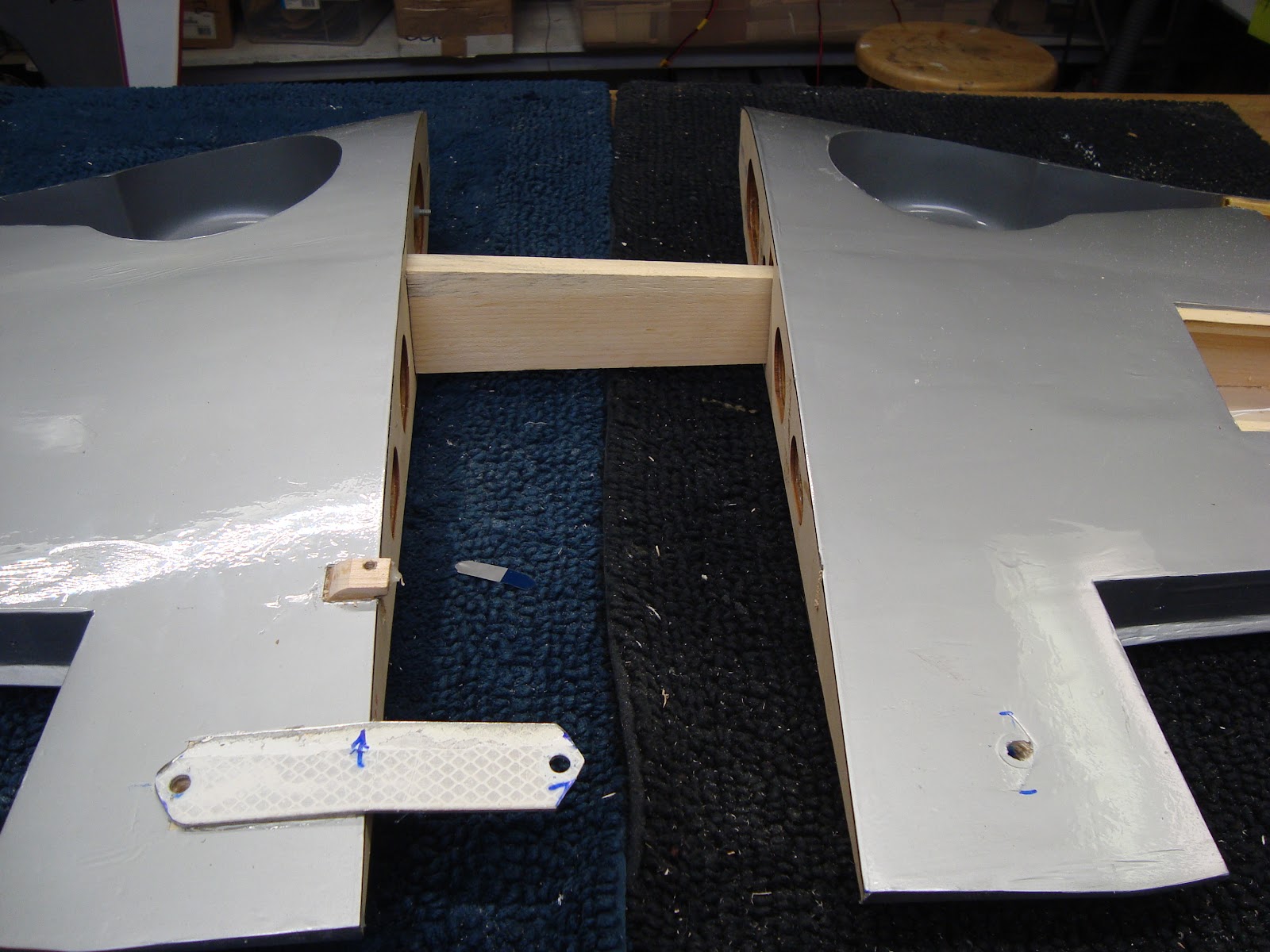
The four Top Flite 1/5 P-51D arf / arc's that I have assembled, I've made the wing in two sections. It makes transport of the wing easier for me. The wing is assembled at the field and then bolted on the fuselage. The two piece wing set up has held up to many flights.

You can probably improve on my method but here is the way I did it.

1. I only glue the wing joiner into only one panel.  The other wing panel sides on the joiner.


2. I glue a 1/4" thick maple or other hardwood  plate into the forward rib hole. 

3. From the wheel well, a 5/32" diameter hole in drilled in the 1/4" maple plate and a 1.5" long or so 10/24 socket head bolt is inserted. 


On the opposite wing another maple plate in glued into the forward rib hole and tapped to accept the 10/24 bolt.


When the two wing panels are slid together, the 10/24 bolt is screwed in to secure the front part of the two wing panels. The wing dowels also do the job of securing the wing panels together when the wing is bolted on the fuselage, but I added the 10/24 bolt for added piece of mind.


The back of the wing is held together by a 1/8" aluminum or ply plate that the wing hold down bolts go through.  One side of the rear hold down plate may be glued on and left on that wing section. The wing hold down plate is covered by the radiator scoop.


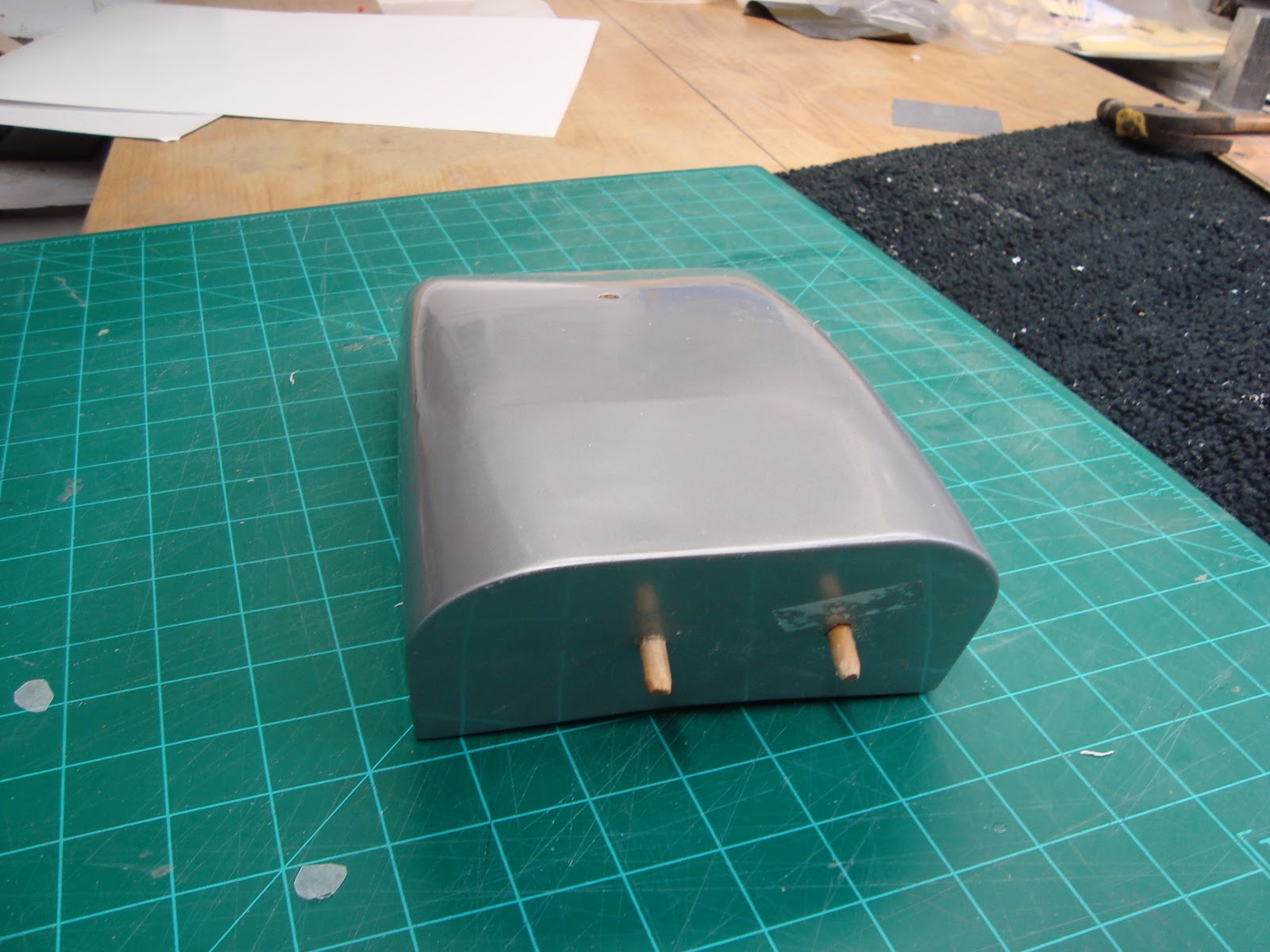
Now the radiator scoop. Once the wing is bolted on the fuselage, I attached the radiator scoop to the bottom of the wing. I used two dowels in the back of the scoop that go into the fuselage former and a center bolt to hold the scoop on. A threaded maple block is glued to the bottom of the wing to accept the scoop hold down bolt.  A club mate uses magnets to hold on the scoop and his rad scoop has never come off in flight. You may come up with an alternate method.


Bolt access hold for the radiator hold down bolt.


On a on piece wing this front fiberglass wing cover is glued on the wing however on the piece two wing the front fiberglass bottom wing cover is glued to the fuselage instead of the front of the wing. 


There will be two air lines coming out of each wing panel,  the method you chose how to hook these air lines up is up to you, I use the Robart quick connects and T fittings, and then hook the air lines to the airlines coming from the retract valve. in the fuselage.


At my age, I look for more functionality over than true scale appearance, your scale tastes may differ.

cheers - ken


Monday, January 14, 2019

New Blog Site - Saunders Aircraft Canada Story

note! a new blog site has been  set up solely for Saunders Aircraft at Saunders Aircraft Canada

The response on Saunders Aircraft Canada has been wonderful so  we have decided to set  up a new blog site solely for the Saunders Aircraft Canada story. Thank-you!
Saunders Aircraft Canada

and we are still on Facebook at Saunders Aircraft Facebook Group


In the weeks, months, years to come, we'll add to the Saunders story as the information comes in!


Saunders Aircraft Mid-January 2019 Research Update

note! a new blog site has been  set up solely for Saunders Aircraft at Saunders Aircraft Canada

Saunders Aircraft Mid-January 2019 Research Update


Thank-you all for replying to my emails, my questions and phone calls on Saunders Aircraft, I hope I’m not a bother to you, I like to think of you as part of my Saunders research team.
My goal is to tell the Saunders Aircraft story, why?

We have a rc model airplane airfield adjacent to the airport at Gimli, it’s mecca for us that fly rc airplanes. We excitedly bring our RV’s, full of rc airplanes out to this model field and we stay for a weekend or longer. Playing and flying our toy airplanes and telling airplane stories around the campfire at night, it’s a magical time, I’m a kid again!

Being a native Manitoban and with a passion for aviation how could I not know about Saunders Aircraft.
I confess that I was at the Gimli airport in the summer 1975 as a Red River College summer student working the Manitoba Dept. of Public Works doing survey work on parking lots, and I’ll admit I was more interested in the Harvard aircraft parked on the north side of Hangar 1 than learning about Saunders. I continued in the civil  - geotechnical field and did not work in the aviation industry.

I’m now retired, I do occasional part time work for a geotechnical engineering company here in Winnipeg and thus I have time to do aviation research when not building rc airplanes.

In 2012 a rc model airplane club mate, Wilf, who worked at Saunders Aircraft decided to build a rc model of the ST-28, and I volunteered to do some Saunders research and roughly sketch up a draft set of plans for a ~93” wingspan model and the seed was planted for me on the Saunders story.


From 2012 to 2018, whenever I found Saunders information on the internet I would save it. When it was too windy to fly our rc airplanes at Gimli field, we would tour the Gimli airport and visit the ST-28 airframe and static test airframe. It’s sad to say that the ST-28 airframe was scrapped by the WCAM museum a couple of years ago.

Where are we now:
A blog site newly set up for only for Saunders Aircraft - https://saundersaircraft.blogspot.com/   the posts are not in chronological order, we share the information as it comes in.

A Saunders Aircraft Facebook Group page at `            https://www.facebook.com/groups/2763480640542919/?ref=bookmarks


Thank-you again for sharing your information, if you see I have used your information in-correctly, let me know and I’ll fix it and I repeat that my intention is tell a Saunders Aircraft story with no bias, no criticism, no axe to grind, just to get a good Saunders Aircraft story out on the web for future generations.

Sincerely,
Ken Kalynuk
Winnipeg, Manitoba Canada


Sunday, January 13, 2019

From Pickle Lake to Paradise book by the Habitual Lawbreaker aka Ray Fread

Thank-you Ray Fread aka the Habitual Lawbreaker.

While a few aviation folks wait to save their photographs for that perfect time to publish them, Ray Fread has take a different approach, and has posted hundreds of his aviation photographs on his Facebook page Habitual-Lawbreaker on FB for all to see and use.

Many of Ray's photos were on the internet long before his book "From Pickle Lake to Paradise" came out, so a big THANK-YOU!

Retired pilot, aircraft maintenance engineer, Ray Fread has penned an account of his many years flying and fixing planes in Northwestern Ontario and the world beyond.
From Pickle Lake to Paradise: The Life and Times of a Habitual Lawbreaker is available at Novel Ideas in downtown Dryden. Photo by Chris Marchand


Too get your copy of "From Pickle Lake to Paradise" find Ray on Facebook at Habitual-Lawbreaker on FB or email Ray at rayfread@drytel.net

In the space of four years Fread became both a licensed aircraft maintenance engineer as well as a commercial pilot. 
“I tried to write this book as I lived it, not by talking about puppies and ribbons and flowers,” said Fread. “I wrote it how it happened and with rough language at times. I wanted it to be authentic. I’ve looked up a lot of the air crashes and aviation history from around here and there’s nothing in writing. Even Transport Canada accident reports — many are just plain wrong.”
Fread’s career in aviation was far from limited to flying float planes and water bombers in the Northwest. From Canada’s arctic to the Caribbean and even the unique distinction of being the first floatplane pilot to operate in Dubai, United Arab Emirates, Fread credits his wife Jane for great patience and support that allowed him to chase opportunities all over the globe.

Saturday, January 12, 2019

Saunders Aircraft ST-27 013 / Dehavilland Heron DH114 14051

note! a new blog site has been  set up solely for Saunders Aircraft at Saunders Aircraft Canada

Saunders Aircraft ST-27 013 / Dehavilland Heron DH114 14051

Number 13 of  Saunders ST-27 aircraft line, why start at Saunders Aircraft ST-27 013?


Saunders Aircraft ST-27 013 photo by Ruben Husberg


 It so happens that most of the information for ST-27  013 fell into place first. Ray Fread's (of Habitual Lawbreaker book fame  ) photos of Dehavilland  Heron 14051 G-AZSO on the apron at Gimli are priceless, his photos place Heron 14051 G-AZSO at the Saunders Aircraft factory at Gimli in around 1974.


Dehavilland Heron DH114 14051 G-AZSO at Gimli CYGM - Ray Fread photo

Dehavilland Heron DH114 14051 G-AZSO at Gimli CYGM - Ray Fread photo

 The British CAA (Civil Aircraft Authority) only issued registration marks (letters like G_AZSU)  to only one aircraft. IF that aircraft was destroyed or left the UK those registration letters were cancelled and not used again.


the UK CAA registration details from the UK CAA website


When tracing aircraft history using Canadian registration marks provides a challenge as Transport Canada re-uses the same registration marks over and over again, though in this case we do see Saunders ST-27 registered as C-GCAT.


the Transport Canada registration details for Saunders Aircraft ST-27 013 C-GCAT
Therefore we believe  Saunders ST-27 serial number 013 was converted from Dehavilland DH114 Heron serial number 14051. 

In 1977, ST-27 013 later caught fire at the Dryden Airport CYHD  apron in 1977 while in service with ON AIR Limited out of Thunder Bay Ontario and it so happens Ray Fread took photos of 013 the morning after the fire, what a coincidence!!


Saunders Aircraft ST-27 013 C-GCAT post fire Dryden Airport CYHD - Ray Fread photo

Saunders Aircraft ST-27 013 C-GCAT post fire Dryden Airport CYHD - Ray Fread photo

Saunders Aircraft ST-27 013 C-GCAT post fire Dryden Airport CYHD - Ray Fread photo

Saunders Aircraft ST-27 013 C-GCAT post fire Dryden Airport CYHD - Ray Fread photo

Ray Fread's account on this Saunders ST-27 013 fire:


 "in 1977, I show up for work in the Dryden Airport Weather office and see this on the tarmac. This ST-27 had a failed fuel pump. The owner Fritz Meier and his engineer Marty Doyle showed up to change it. Airports closed, it's dark and cold, they are working with a little generator to run a trouble light. Fuel on the tarmac from pulling the pump. As they walk away, wearing heavy boots and parkas, one of them kicks the cord and breaks the trouble light bulb...KABOOM!!!!!! Parts of this plane landed on the runway, hundreds of feet away."

There was a court case about this aircraft being repaired after the fire damage basically spelling the end of this airframe use, we hope to post that story when we can get more info, and where this 013 airframe finally ended up at.

PS - order a copy of Ray Fread's book, "The Habitual Lawbreaker" - it's a great read!
https://thedrydenobserver.ca/2017/07/19/the-wild-northwest-fread-autobiography-a-page-turning-look-at-the-once-lawless-world-of-bush-aviation/

Friday, January 11, 2019

The Saunders Aircraft Story updates to 2019-01-11

note! a new blog site has been  set up solely for Saunders Aircraft at Saunders Aircraft Canada

The Saunders Aircraft Story updates to 2019-01-11.

This has been a great week! We have had coffee with the Chief Design Engineer for Saunders Aircraft from 1972 to 1976 and that is a full story of his moving from Los Angeles to Gimli in 1972 to be hired by Saunders Aircraft.

This blog will not tell the Saunders story in order, I am posting the information as I receive or find it so if you are looking for the Saunders Aircraft stuff, the best way is to use the search box on the right, example shown below.

I suppose I could collect the stuff, put it in order, and write a full story or book, but what if I croak when it's 1/2 done, for me it's best to post it out there on the web sooner that later.


Today Ray Fread of Dryden, ON. points me toward his photo, this is the only photo of a Dehavilland DH114 Heron serial no. 14051 G-AZSO taken at Gimli that I have found, WOW, thank-you Ray Fread.

More information on Heron 14051 G-AZSO to come soon.
Dehavilland DH114 Heron #14051 G-AZSO - photo by Ray Fread

Dehavilland DH114 Heron #14051 G-AZSO - photo by Ray Fread


Why Blog About Aviation or History or Yourself

note! a new blog site has been  set up solely for Saunders Aircraft at Saunders Aircraft Canada

Why Blog About Aviation History - I write my blogs in obscurity, no book, no movie, no money. I like any aviation story and I like to share my aviation stories and I like to share aviation stories that are told to me or that I hear from others.

I'm not an English major or minor, my writing may be poor, and if no one reads them, I'm ok with that, my goal is to get stories out there in case one day some one googles a subject, and hopefully my blogging may add a small piece of information to their search.

I was happy with that, until .........I watched this USS Indianapolis PBS documentary and then I became .............


overjoyed!

This video is about finding the sunken USS Indianapolis and in the video this story is shared....

"While reviewing the Navy’s holdings and other information related to Indianapolis, NHHC historian Richard Hulver, Ph.D., found a blog post and photo online that recounted the story of a World War II Sailor whose ship passed Indianapolis less than a day before the ship was sunk. 

This corroborated an account by Indianapolis Captain Charles McVay, III that his ship passed an unspecified LST approximately 11 hours prior to the sinking. Hulver located the Sailor’s service record from the National Personnel Records Center which identified the Sailor as a passenger on tank landing ship USS LST-779 during the period in which Indianapolis sank. That sent Hulver to the National Archives where LST-779’s deck logs confirmed the story." borrowed  from Passion About History Blog.

In the past, libraries and museums were our main sources of information, now information can be shared with a few, or hundreds, or thousands, or millions via the internet for today and for the future.

So if you are a blogger - keep blogging!
 If you do not wish to blog but have a aviation story to share  EMAIL ME and I'll post it with your name or anonymously, which ever you chose.

Everyone Has a Story to Tell

and this morning I found a blog the other Bob Hoover - what a nice read.

cheers - ken kalynuk


Sunday, January 06, 2019

Documenting Saunders Aircraft Gimli - Dehavilland DH114 Heron

note! a new blog site has been  set up solely for Saunders Aircraft at Saunders Aircraft Canada

One of the hurdles we face in telling the Saunders Aircraft Gimli story is "official" documentation. On the internet, we find this photo of a DeHavilland Heron DH114 taken by Erik Frikke with a Canadian aircraft  registration C-GCRN, and the previous registration painted out.


The online Transport Canada historical registrations at Transport Canada historical aircraft registration search provide no information as the online records only go back to 1976, so I've emailed Transport Canada and hope I get some information back and we have to remember that Canadian aircraft registrations were used over and over again and thus is not a perfect method of tracking aircraft history.

We can presume that this Heron is coming to or leaving Canada and maybe there is a copy of the import / export permit or ferrying in a cardboard box somewhere in a basement corner.

These are photographer's Erik Frikke's web notes for the above photograph "ex CX-AOR, G-APKT, 9L-LAG. On its way to Canada for conversion to ST-27 standard, but was broken up instead."

How do we verify this information, I've contacted Erik Frikke and hope to hear back from him.

If we do believe that the above photograph is of G-APKT Dehavilland Heron DH114 serial number 14019 then a search of UK aircraft registrations give us the following (and UK aircraft registrations are only used once and not re-issued) that G-APKT is Heron serial number 14019.


Then the task to verify that the Heron with Canadian registration C-GCRN is actually serial # 14019 and we have a small lead to follow that in 1964 this Heron # 14019 is off to Sierra Leone, the story on Heron #14019 to be continued.................


Saturday, December 29, 2018

Saunders Aircraft ST-27 / DeHavilland Heron Lineage

note! a new blog site has been  set up solely for Saunders Aircraft at Saunders Aircraft Canada

One can trace the Saunders Aircraft ST-27 narrow fuselage to it's early days, the Saunders Aircraft ST-27 was a conversion of the De Havilland DH114 Heron, and thus retains the fuselage shape lineage of the DeHavilland aircraft before the ST-27.


Saunders ST-27 seating - Den Pascoe
The DeHavilland Passenger Aircraft Lineage.

The first DeHavilland commercial passenger carrying aircraft was the DH83 Fox Moth, 

The  narrow fuselage Fox Moth fuselage wraps around the four cylinder De Havilland Gypsy Major in line engine.
DeHavilland Gypsy Major engine


The De Havilland DH83 Fox Moth first flew in January 1932 and was built using as many DH82 Tiger Moth parts as possible.  The Fox Moth could carry a pilot and four passengers using a DeHavilland Gypsy Major 1C engine of 145 horsepower.
DH83 Fox Moth


DeHavilland Gypsy Major engine - front view


The Dehavilland Fox Moth was followed by the twin engine DeHavilland DH84 Dragon, flown in December of 1932. The Gypsy Major engines were moved to the lower wing and the narrow fuselage carried on. The Dragon carried six passengers plus the pilot.
DH84 Dragon

The DeHavilland Dragon was followed by the DeHavilland DH86 Express - designed for Quantas Airlines, first flown in 1934 with four Gypsy Six engines of 200 horsepower each. The Express carried 10 passengers plus two pilots.
DH86 Express

Also flown in 1934 was the DeHavilland DH89 Rapide, a scale down version of the DH86 Express with twin Gypsy Six engines. The Rapide carried a pilot and eight passengers.
DH89 Rapide
restored DH89 at Duxford airfield
During WWII from 1939 to 1945, DeHavilland focuses on military aircraft.

In September of 1945,  the DeHavilland DH104 Dove is flown, the Dove aircraft is completely metal constructed and powered by was the DeHavilland Gypsy Queen engines of 340 to 380 horsepower each and features and retractable undercarriage. The Dove and carry two pilots and eleven passengers. The last DeHavilland Dove was produced in 1968.

DeHavilland DH104 Dove
The DeHavilland Dove was followed up by the DeHavilland DH114 Heron in May of 1950. The Heron isbasically a scaled up Dove with four Gypsy Queen 30 engines of 250 horsepower each. The Heron carried 17 passengers plus two pilots. The first Heron version Mark I, had fixed gear, followed by the Mark II that had retractable landing gear.

DH114 Heron
DH114 Heron interior
Then in 1968 Saunders Aircraft at Montreal begins conversion of DeHavilland DH114 aircraft by removing the four Gypsy Queen engines and installing a pair of Pratt & Whitney Canada PT-6 turboprop engines and lengthens the Heron fuselage by 8'-6" with two fuselage plugs.

ST-27 DH114 conversion - the shiny skin metal indicate the two fuselage plugs. Andre Belanger collection.


Painted ST-27 DH114 conversion at Saunders Montreal hangar. Andre Belanger collection.


Later Saunders ST-27 at Gimli, Manitoba. Andre Belanger collection/


The full list of DeHavilland aircraft made. DeHavilland Aircraft becasme part of the Hawker Siddley Group in 1960 and the DeHavilland corporate name ceased to be used in 1963.